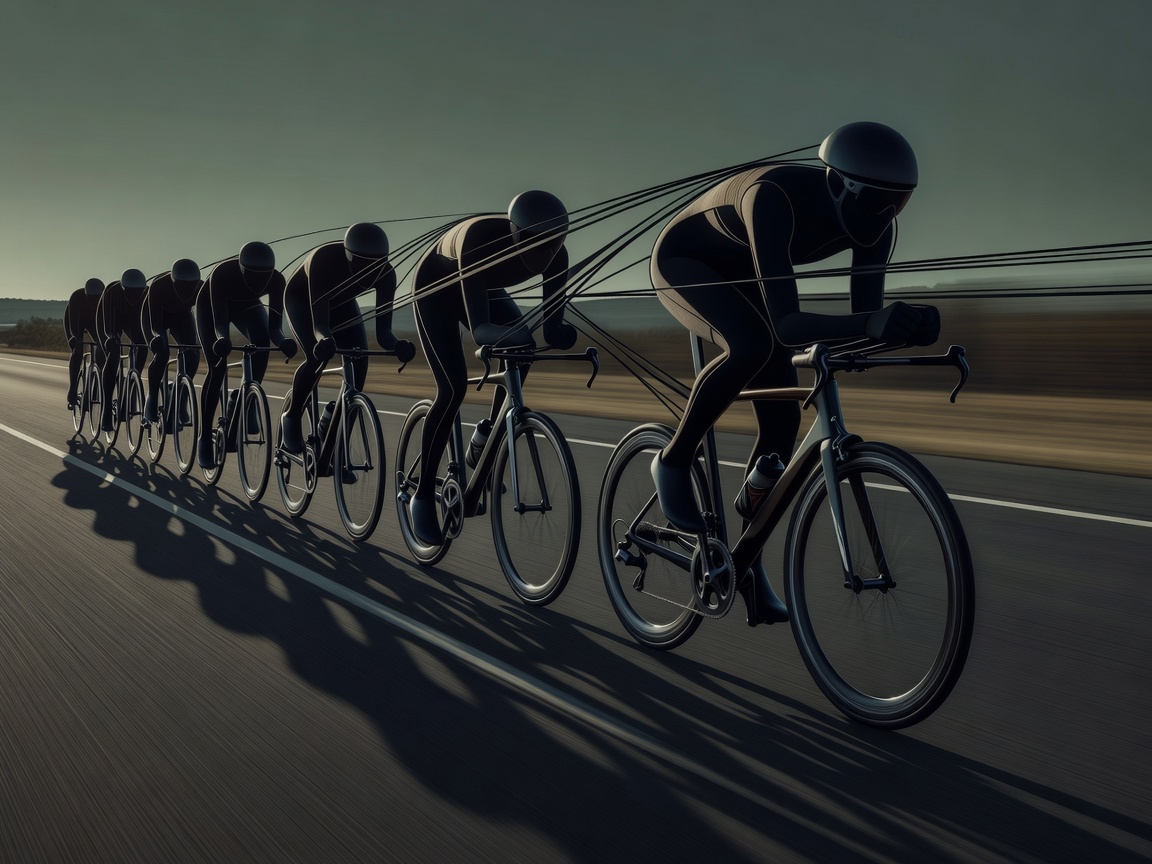
The protected leader
A team enters a Grand Tour with priorities. It may support a general-classification leader, a sprinter, a stage hunter, or several aims that have to coexist. The protected rider is not necessarily the strongest on every road; they are the rider around whom the day’s resources are organised.
In GC racing, teammates help a leader avoid needless effort. They bring food and bottles, guide them through the peloton, cover early moves and remain nearby when wind or crashes split the race. The aim is often invisible: arrive at the decisive climb or time trial with as much energy and as little time lost as possible.
Domestiques
A domestique is a rider working for a teammate. The French word is widely used because the job has no neat substitute. On flat roads, domestiques ride at the front to control a breakaway’s lead. In crosswinds, they help form a protected line. On climbs, they set a steady pace until their own effort is spent.
That work can be sacrificial. A domestique may finish far behind after spending the day in the wind, yet have been essential to the leader’s result. Their value is contextual: a strong climber is useful in the mountains, while a powerful rouleur can be especially valuable on exposed flat roads and in a chase.
Sprinters and lead-outs
A sprint team seeks order late in a fast stage. Riders position their sprinter, keep rivals from taking the best wheel and increase speed close to the finish. The lead-out is not a simple queue: road furniture, corners, wind direction and competing trains continually disrupt it.
Some teams arrive with a dedicated sprint focus; others choose not to spend resources on one, particularly if their central goal is GC. The trade-off is direct. Chasing a breakaway and building a lead-out consumes riders who cannot also sit beside a GC leader all day.
Breakaways and satellite riders
A breakaway is a group that moves ahead of the peloton. Teams place riders there to chase a stage win, collect classification points or create a tactical option for a leader later in the stage. A teammate ahead can provide shelter, pacing or a wheel for a leader who attacks across a gap. This is often called using a satellite rider.
The plan is difficult because the peloton decides whether to chase. A breakaway succeeds when the groups behind have conflicting interests or lack enough riders willing to work. A team with the overall leader may let a non-threatening break go; a sprint team may decide that it must bring the move back.
Communication and adaptation
Race radio, team cars and road captains help coordinate a moving group, subject to the event’s rules. But no instruction survives unchanged when a crash, mechanical problem or unexpected attack alters the race. Riders must read the road and make quick decisions.
When watching, look for who is working at the front, who is protected in the middle, and who is already in the break. The team formation often explains the result before the finish line does.