I
Three weeks
Rest days, transfers and accumulating fatigue give the Tour, Giro and Vuelta their distinctive shape.
Read race shapeThe Tour de France, Giro d'Italia and Vuelta a España are three-week stage races. Their rules make the apparent chaos legible: time, points, climbs, teammates and recovery all have a job.
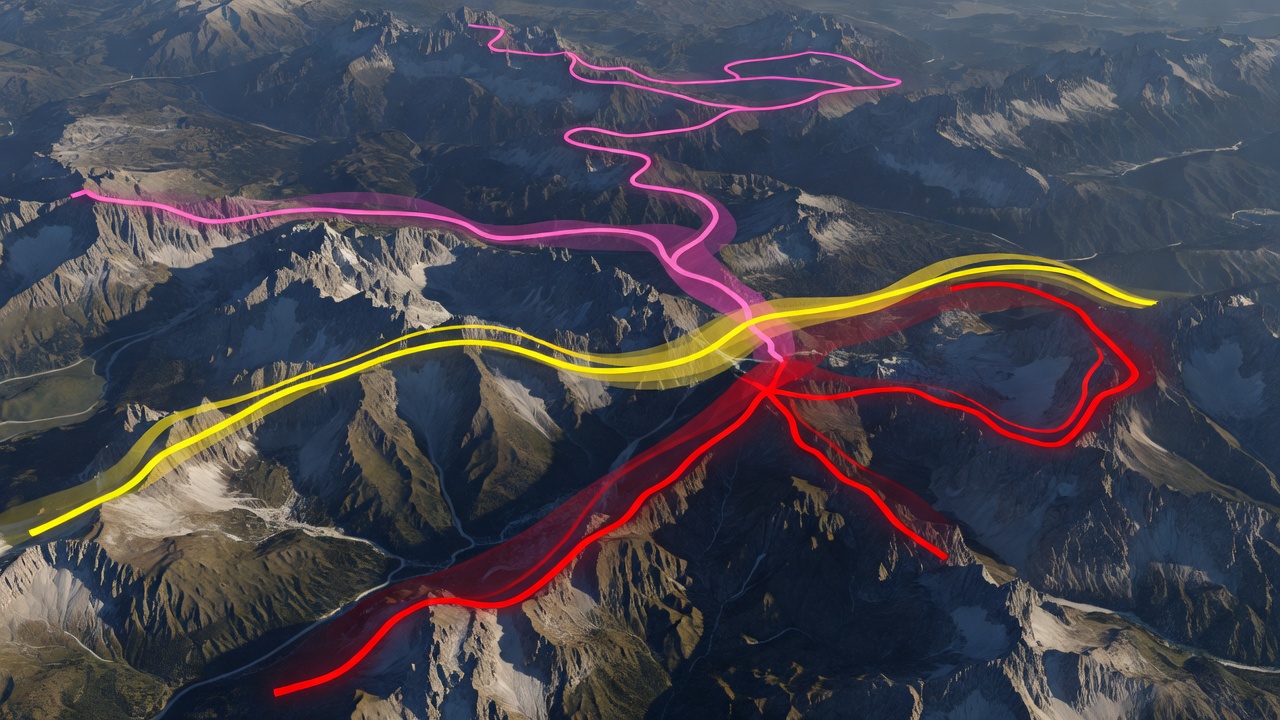
A Grand Tour is not one race repeated each day. It changes character between time trial, flat stage and summit finish, while the general classification keeps adding every second.
Rest days, transfers and accumulating fatigue give the Tour, Giro and Vuelta their distinctive shape.
Read race shapeFlat finishes, rolling terrain, individual time trials and mountain stages reward different riders and tactics.
Read stage typesYellow, pink and red mark overall time; points and mountain classifications run alongside them.
Read jerseysLeaders, domestiques, sprinters and road captains divide work through wind, climbs and the chase.
Read teamsCategories describe difficulty differently across races; gradients, length and position all matter.
Read mountainsThe general classification adds each rider’s elapsed stage times. A tiny gap can matter because it stays on the ledger.
Stage wins, intermediate sprints and summits create targets beyond the overall contest.
A breakaway and the peloton can be pursuing entirely different prizes on the same road.