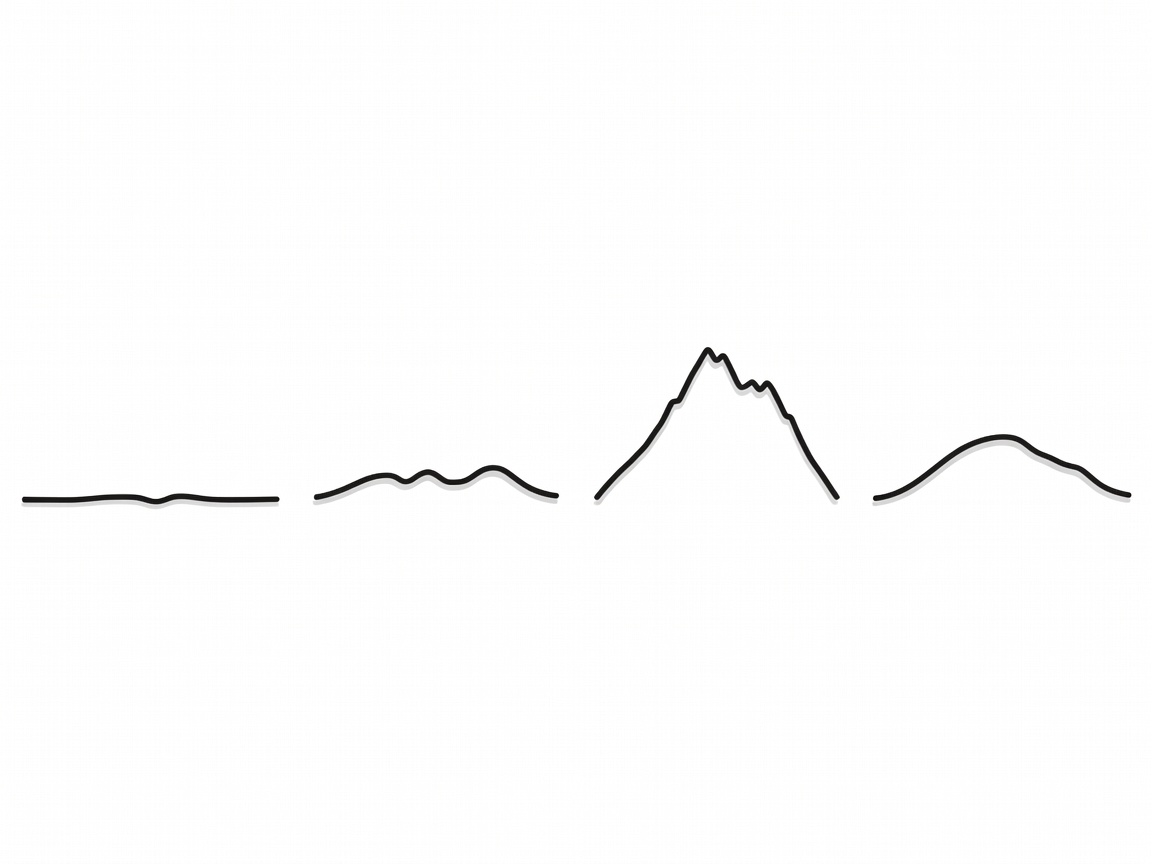
Flat stages
A flat stage usually points towards a bunch sprint. Teams with fast finishers control the pace because allowing a breakaway to stay clear gives away a rare chance at a stage win. The work is collective: riders ride at the front to manage the gap, protect their sprinter from wind and position them near the finish.
“Flat” does not mean easy. Crosswinds can split the peloton into groups, and narrow approaches can make position decisive. GC riders generally aim to finish safely in the main group, conserving attention and teammates for later days. On many races, the timing rules around the finish are designed to reduce danger from small gaps in a crowded sprint, but the relevant regulations should always be checked.
Hilly and medium-mountain stages
Rolling terrain creates uncertainty. A pure sprinter may be dropped on repeated climbs; a climber may find the finish too fast; an attacking rider may use the last ascent to escape. These stages are valuable to breakaways because the peloton has less certainty about who should take responsibility for the chase.
For the GC, a hilly day can be a trap rather than a headline. Short, steep ramps, rain or technical descents can turn a routine finish into a day of small but real time gaps. Teams must decide whether protecting their leader is worth using riders who might be needed later.
Mountain stages
Mountain stages concentrate differences in climbing speed and endurance. The last climb draws attention, but earlier climbs matter because they remove domestiques and force leaders to spend energy before the decisive point. A summit finish makes the calculation direct: the road continues uphill until the timing line. A descent finish introduces another skill and a different risk balance.
Long climbs favour steady pacing; steep changes of gradient can encourage repeated attacks. Altitude, road surface and the sequence of climbs alter the result. This is why a mountain stage profile should be read as a chain, not merely by counting summit icons.
Individual time trials
An individual time trial is the clearest break from bunch-racing logic. Riders start separately and cannot draft one another. Aerodynamics, pacing, cornering and sustained power become central. A specialist can gain substantial time; a strong climber who is less efficient against the clock may have to limit losses.
The route matters sharply. A flat course rewards one set of qualities, while climbs and technical turns reduce the advantage of pure aerodynamic speed. Equipment rules and start order are controlled by event regulations. The key viewing point is simple: time trial gaps are made without the shelter of a team formation.
Team time trials and transitional days
When included, a team time trial asks a squad to ride as a coordinated unit. The governing rules specify how a team’s time is taken, making formation and rider selection critical. Transitional stages, meanwhile, are not empty spaces. They may be calmer on paper, yet fatigue and wind can still reshape the race.
Stage type is therefore a prediction, not a verdict. Read the terrain, then ask who needs the result: sprinters’ teams, breakaway riders, or GC teams. Their competing needs give the stage its plot.