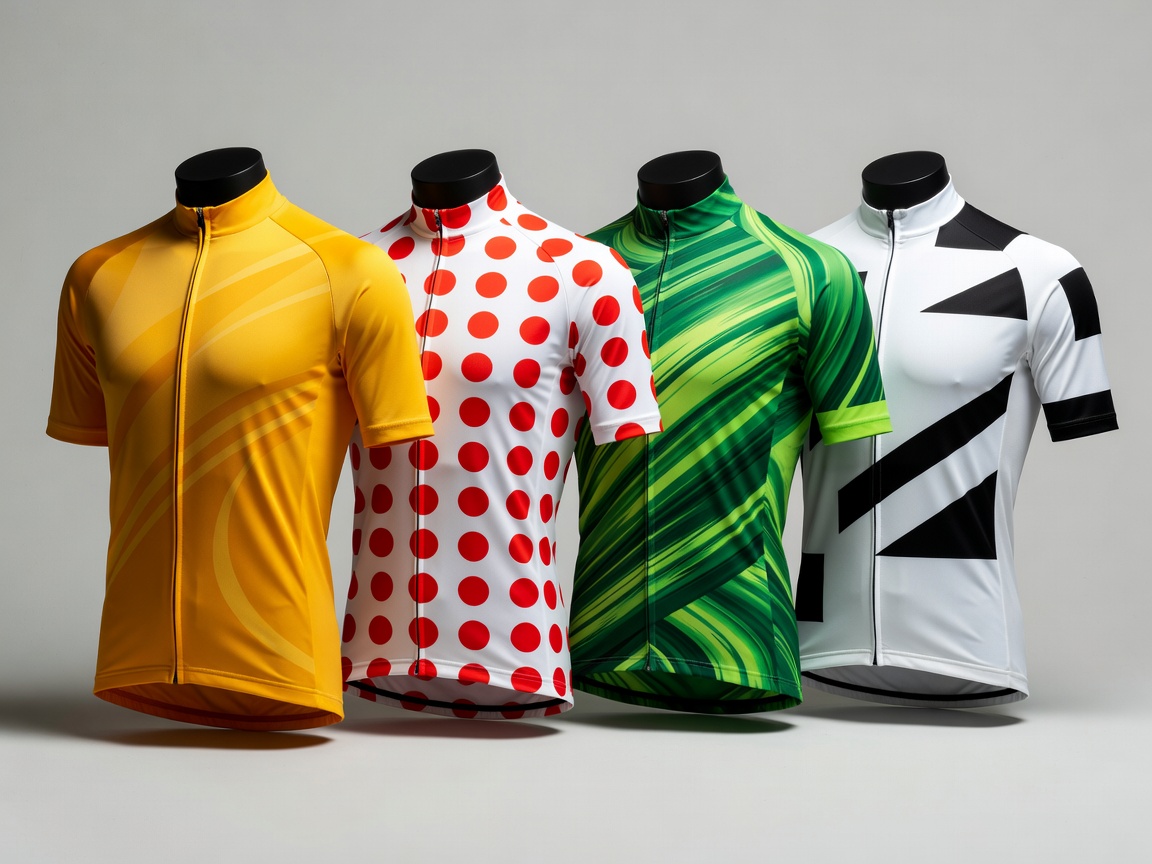
The general classification
The general classification is the central time competition. In the Tour de France its leader wears yellow; in the Giro d'Italia, pink; in the Vuelta a España, red. The jersey changes hands when another rider has the lower accumulated elapsed time. It is not automatically worn by the rider who won the previous stage.
Because it records time, the GC favours riders who can limit losses across every terrain. A rider can win an uphill stage yet remain well behind overall after an earlier time trial. Equally, a leader may ride defensively, finish beside rivals, and keep the jersey without winning. The colour is a daily visual signal of a three-week total.
Points classifications
Points classifications usually reward high finishes at stage finishes and designated intermediate sprints. Their exact scales differ among the races and can change through regulations, so the official rulebook is the reliable source for a particular route. Flat stages commonly offer the largest incentive to sprinters, but some systems also reward consistency across varied terrain.
The Tour’s points leader wears green. The Giro’s points classification uses the cyclamen jersey, while the Vuelta’s points leader wears green. These classifications create tactical contests within stages that have little GC consequence. A rider may join a breakaway to collect intermediate points even when a stage win is unlikely.
Mountain classifications
Mountain points are awarded at classified summits. The Tour de France leader wears the polka-dot jersey; the Giro leader wears blue; the Vuelta leader wears blue and white dots. The points available depend on the category and, in some cases, the route’s regulations for that climb.
A mountain jersey winner need not be the strongest overall climber. The classification can favour a rider who targets breakaways and repeatedly reaches summits first, while GC contenders may save their strongest efforts for later in a climb or for rivals rather than points. This is a useful distinction: climbing ability and mountain-classification strategy overlap, but they are not identical jobs.
Other classifications
Grand Tours also have classifications that recognise younger riders, teams, combativity or other route-specific objectives. Jersey designations are determined by organisers and regulations. When one rider leads more than one classification, another eligible rider may wear a jersey on the road while the leader retains the classification in the standings.
That arrangement prevents a rider from wearing several jerseys at once and makes the start line easier to read. It also explains why the wearer and the classification leader are sometimes different people.
Reading a jersey without overreading it
Ask what is being measured. Time means GC. Points mean placings at specified locations. Mountain points mean summits. Once that is clear, the tactics follow. A points leader needs positioning; a mountain leader needs access to breakaways and climbs; a GC leader needs protection from time loss.
Jerseys turn a complicated results sheet into immediate theatre, but the rules remain underneath. A quick look at the daily standings and official regulations tells you exactly which contest the colour represents.